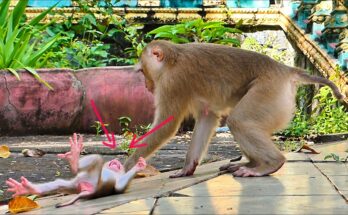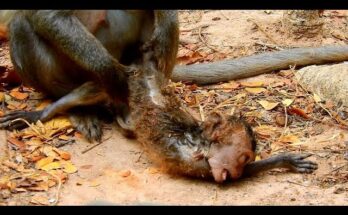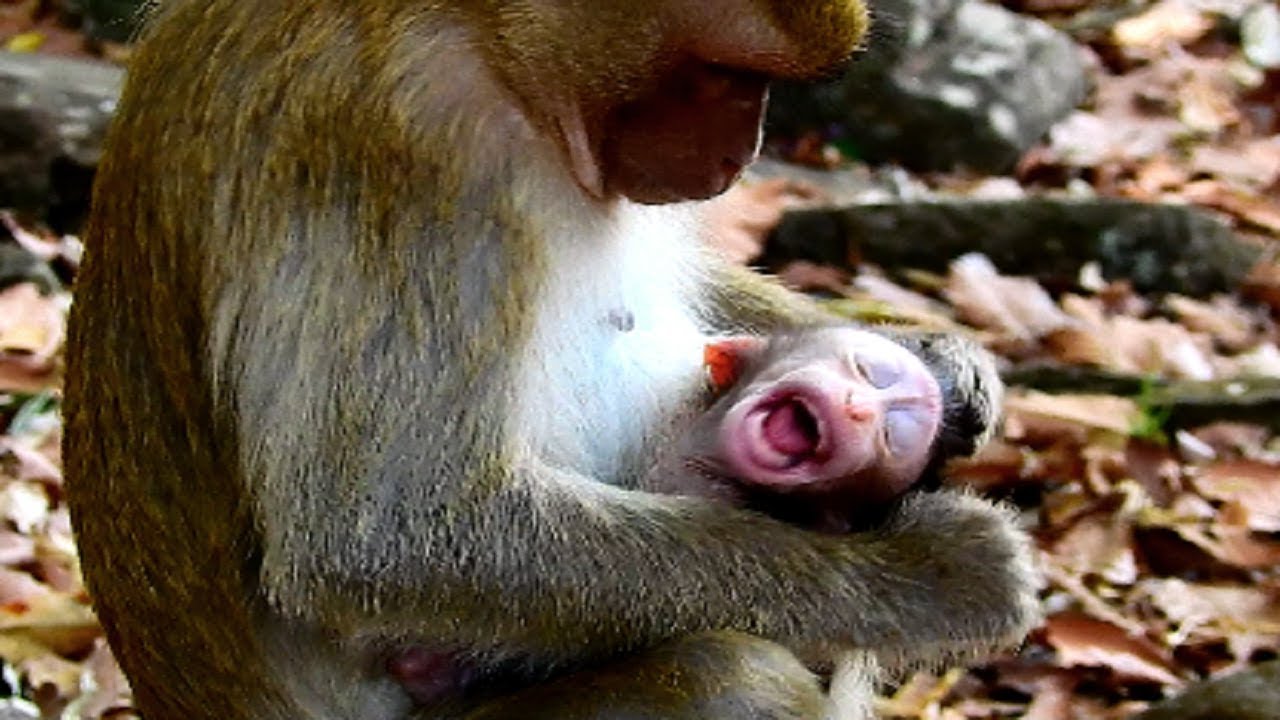
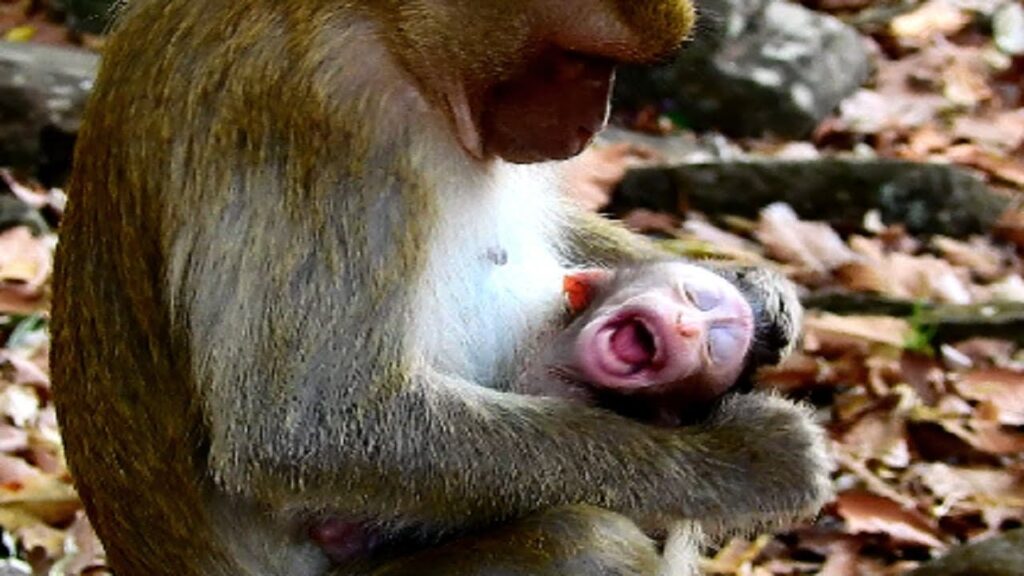
A very emotional scene unfolds in Part 2 as little Bronx appears distressed during a difficult interaction with an older sister. The tiny baby seems uncomfortable and frightened, making this moment especially difficult for viewers to watch.
Bronx stays close to the other monkeys while the situation becomes tense. The baby may vocalize, move away, or try to find a safer position. Young monkeys are naturally vulnerable and often depend on their mothers and other trusted members of their group for protection, nourishment, and comfort.
The interaction may look harsh to human viewers, but it is important to remember that we cannot know exactly what the monkeys intend from a video alone. Monkeys communicate through body movements, sounds, grooming, touching, and sometimes forceful social behavior. What appears to be deliberate mistreatment may sometimes be a warning, boundary-setting, or another form of social interaction.
The most concerning part of the scene is the baby’s apparent difficulty getting access to food or water. A very young monkey needs appropriate nourishment and hydration, and any baby that repeatedly cannot feed, appears extremely weak, or shows signs of injury should be assessed by qualified wildlife professionals or a veterinarian.
Bronx’s small size makes the situation especially touching. The baby may seek its mother’s attention or try to remain close to a familiar adult. A mother can provide warmth, protection, grooming, and reassurance while the infant develops.
As young monkeys grow, they gradually learn how to interact with siblings and other members of their social group. They also become more independent and begin exploring food and their surroundings.
This Part 2 moment reminds viewers that life within a monkey group can include both loving family interactions and complicated social relationships. It is important to observe such situations carefully without assuming motives that cannot be confirmed.
Most importantly, Bronx’s wellbeing should come first. If the baby is actually being prevented from feeding or drinking, or if there are visible injuries or unusual weakness, trained wildlife rescuers should evaluate the situation rather than untrained people attempting to intervene.
Hopefully, Bronx remains close to supportive family members, receives proper nourishment, and stays safe while continuing to grow stronger. The tiny baby’s journey reminds us how important responsible care and protection are during the earliest stages of life.