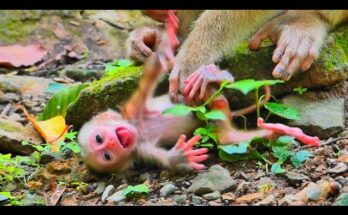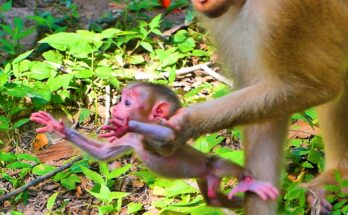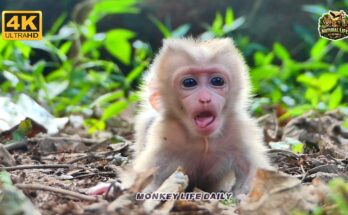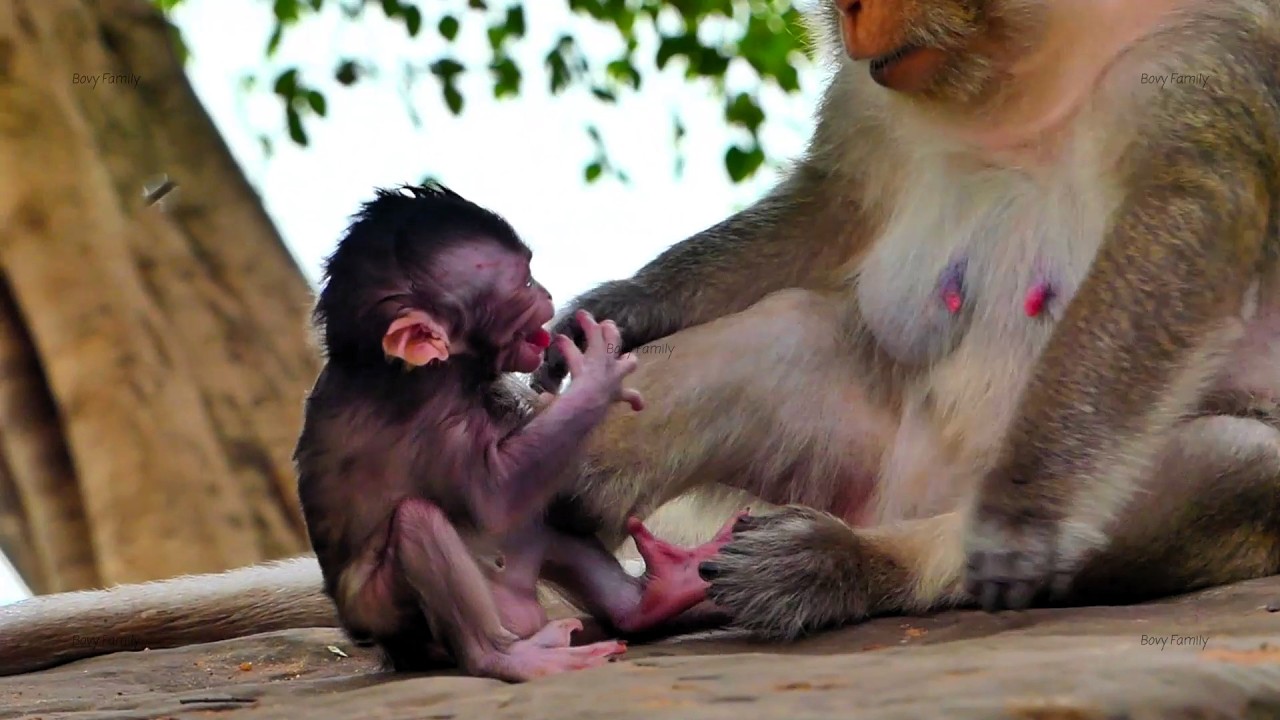
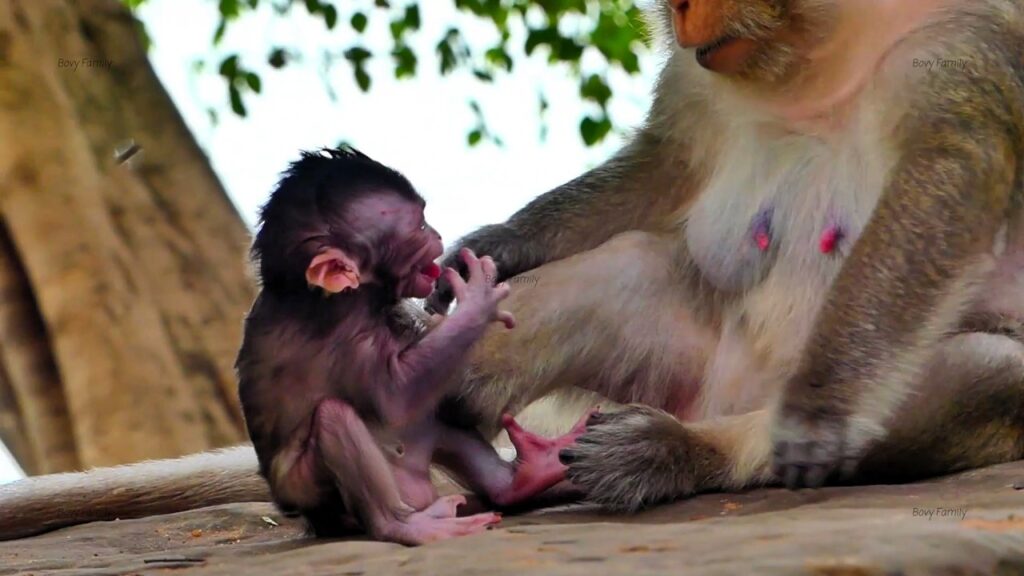
A heartbreaking moment unfolded when a tiny baby monkey cried desperately for his mother’s attention. The infant stayed close to his mother, hoping to receive milk and the comfort he desperately needed. But instead of immediately responding, the mother monkey moved away, leaving the little baby confused and upset.
The baby continued crying, reaching toward his mother with his tiny hands. His cries became louder as he tried to follow her. Anyone watching the scene could not help but feel emotional. Why was the mother refusing to feed her crying baby? Was something wrong?
Animal behavior can sometimes be difficult for humans to understand. A mother monkey may refuse nursing for many different reasons. She could be stressed, tired, inexperienced, or dealing with her own health problems. Sometimes an infant may also need assistance if the mother is unable or unwilling to care for it.
Fortunately, concerned caregivers noticed the situation and carefully monitored the baby. Their priority was to make sure the little monkey remained safe and received appropriate care. They avoided interfering unnecessarily while watching for signs that the baby needed help.
The tiny infant eventually became quieter as someone gently comforted him. Although the moment was painful to watch, it reminded everyone that wild animals have complex behaviors that cannot always be understood from a single scene.
For the baby monkey, every moment mattered. He needed warmth, nutrition, protection, and patience. The people caring for him hoped that his mother would eventually accept him and that their natural bond could grow stronger.
This emotional encounter teaches us an important lesson: we should never rush to judge an animal based only on what we see. There may be hidden reasons behind its behavior.
Most importantly, every vulnerable baby deserves compassion and protection. Whether in the wild or under human care, a young life depends on responsible adults and caregivers to help ensure that it has the chance to grow strong, healthy, and happy.