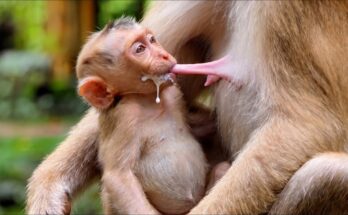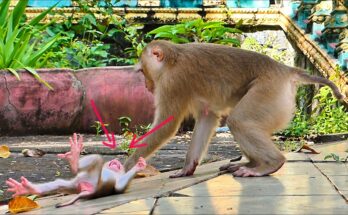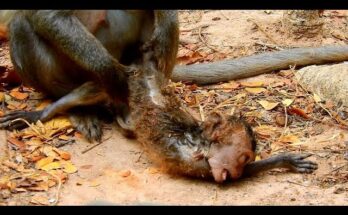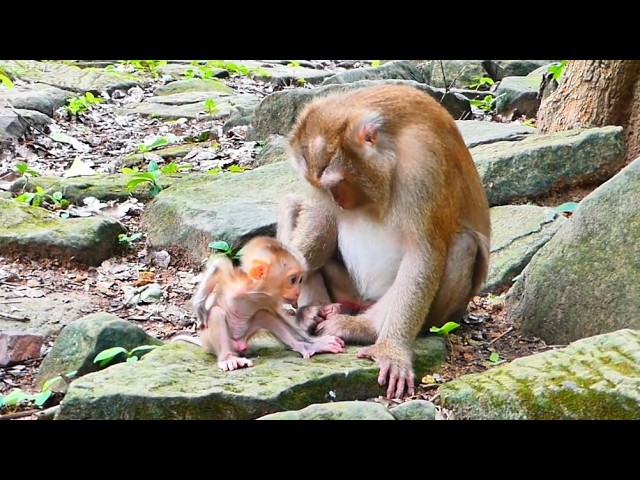
A heartbreaking scene unfolds as a tiny little monkey appears to be alone and without the comfort of its family. The baby looks small and vulnerable, making everyone wonder what happened and where its mother might be.
For a young monkey, being separated from its mother can be frightening. Baby monkeys normally depend on their mothers for warmth, nourishment, protection, and guidance. Staying close to a familiar adult helps them feel safe while they gradually learn about the world around them.
The little monkey may look around carefully, searching for someone familiar. It might make small calls, reach out with its tiny hands, or move from one place to another. These behaviors can be ways for a young monkey to communicate that it needs attention or reassurance.
Although the word “abandoned” may describe how the situation looks, it is important not to assume that the mother has truly abandoned the baby without observing the situation carefully. In the wild, mothers may temporarily move away to find food or avoid danger before returning to their infants.
The baby’s condition is especially important. If it appears extremely weak, injured, dehydrated, unable to feed, or completely separated from its group for an extended period, qualified wildlife rescuers or veterinarians should assess it.
People should avoid giving inappropriate food or trying to raise a wild baby monkey without professional guidance. Young wildlife has specific nutritional and social needs that are difficult to provide without proper expertise.
The little monkey’s innocent face makes this moment especially touching. Despite being tiny, it is beginning a journey of learning and survival. With appropriate professional care, a separated infant may have a better chance of becoming healthy and eventually developing the skills it needs.
Hopefully, the baby can receive the protection, nourishment, and companionship it needs. Whether its mother returns or trained rescuers provide assistance, the priority should always be the little monkey’s safety and wellbeing.
This emotional moment reminds us how precious young animals are and how important responsible wildlife care can be.