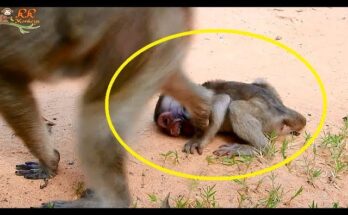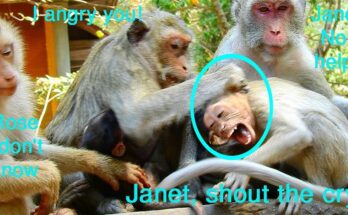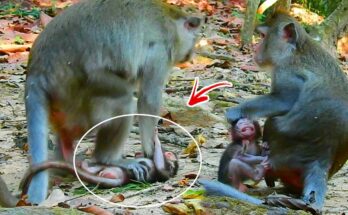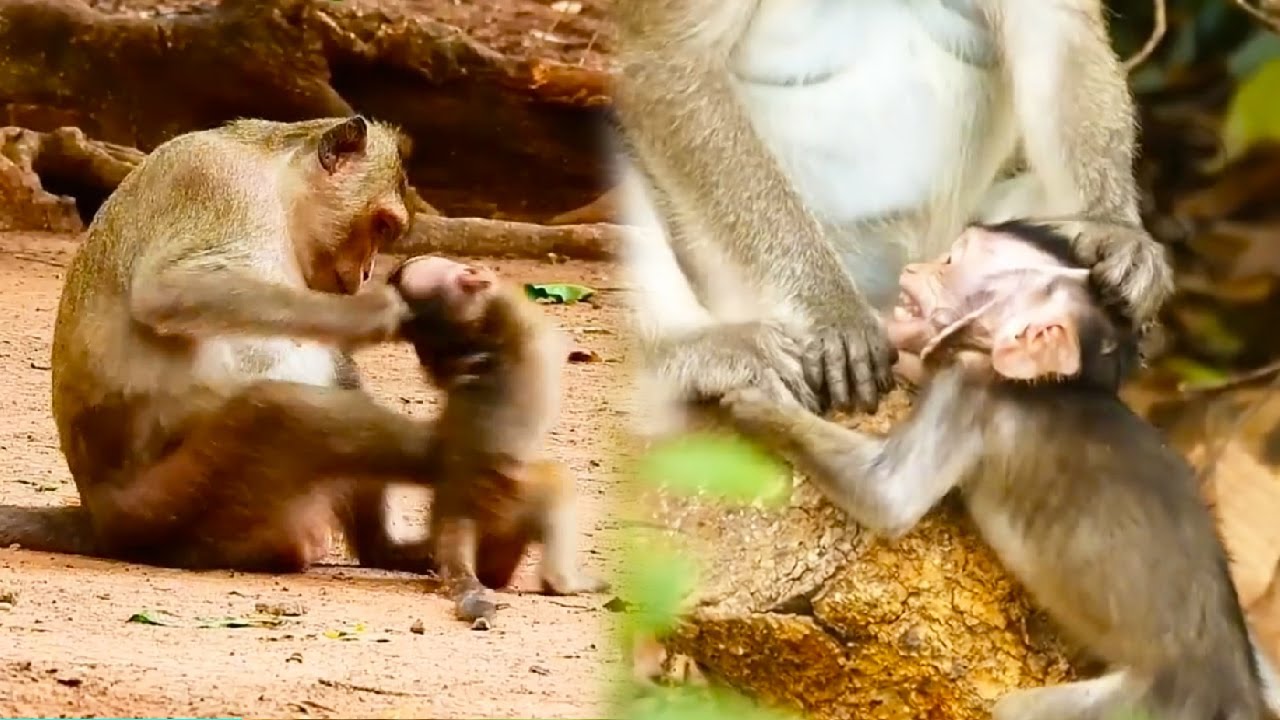
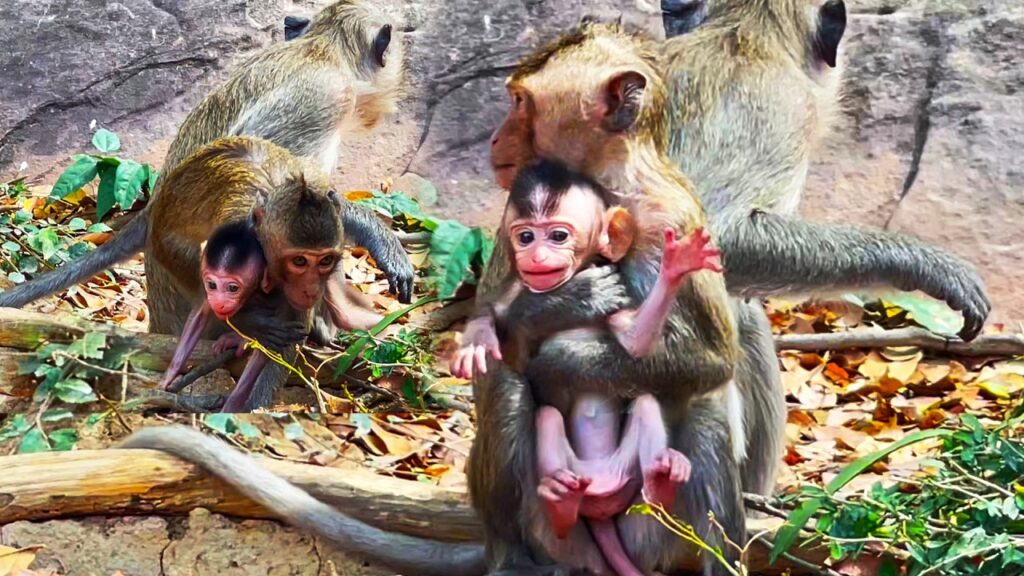
The journey from complete dependence to growing independence is one of the most important stages in a baby monkey’s life. As the young monkey becomes older, the mother gradually begins the weaning process, encouraging her baby to rely less on nursing and more on exploring the world. To human observers, this transition can sometimes appear harsh or confusing, but it is often a natural part of a young monkey’s development.
During weaning, the baby may continue trying to nurse even when the mother gently refuses. This can lead to emotional moments where the infant cries, follows its mother closely, or reaches out for comfort. Although these scenes may seem heartbreaking, the mother’s behavior is often guided by instinct and helps prepare her baby for greater independence.
At the same time, the mother continues to protect her young from danger. She remains alert to her surroundings and watches over her baby, even while encouraging it to become more self-reliant. Her actions help the youngster develop confidence, learn to find food, interact with other monkeys, and build the skills needed for life within the group.
The baby monkey may not immediately understand why nursing is becoming less frequent. It is natural for the youngster to seek reassurance and remain close to its mother during this period of change. With patience and time, the baby gradually adapts to its new stage of growth.
Watching this transition reminds us that growing up is not always easy. Both the mother and her baby experience challenges as they adjust to new routines and changing needs. What may look like rejection can instead be part of the natural process of raising a healthy, independent young monkey.
This touching story highlights the strength of the bond between mother and baby. Even during difficult moments, their relationship continues to be built on protection, guidance, and care, helping the young monkey grow into a confident and capable member of its family group.