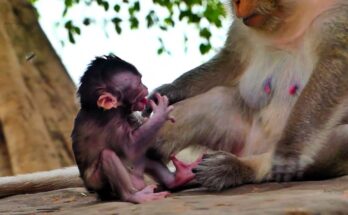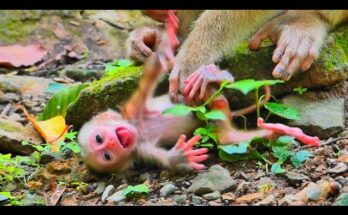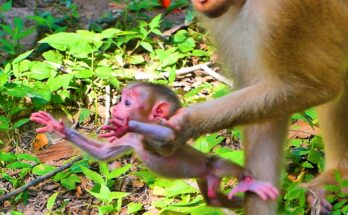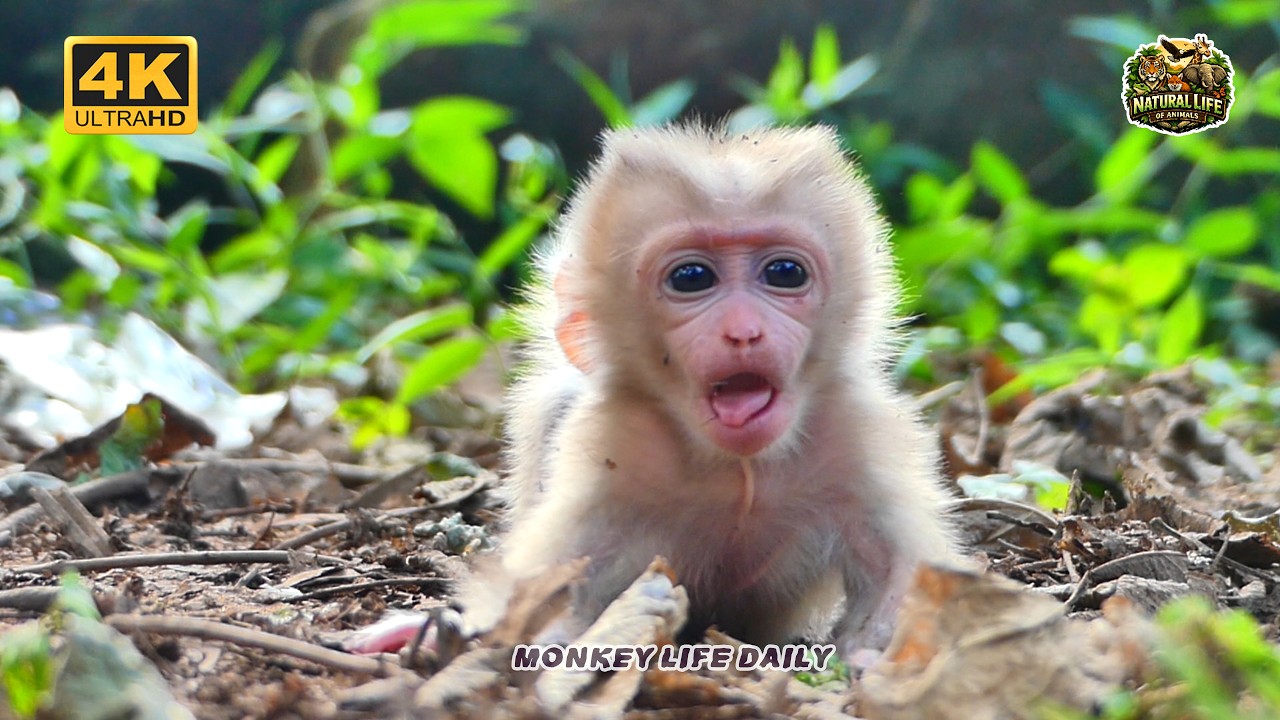
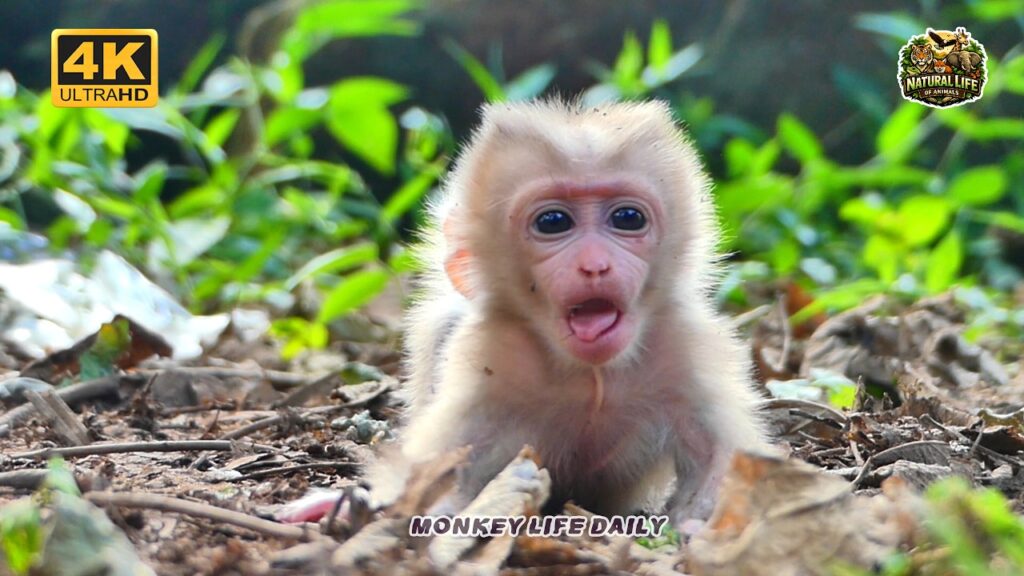
In the heart of the forest, baby Meta clung tightly to her mother, Metrey, as they moved through the trees. At first glance, it might seem as though Metrey paid little attention to her young infant. She didn’t constantly cuddle Meta or carry her everywhere. Instead, she encouraged the tiny monkey to explore, climb, and learn on her own.
Whenever Meta struggled to balance on a low branch, Metrey watched from nearby without rushing to help. If the baby slipped, she quickly climbed back up and tried again. These small challenges were an important part of growing stronger and more confident. Rather than protecting Meta from every difficulty, Metrey allowed her to develop the skills she would need throughout her life.
As the day continued, Metrey searched for fruits, leaves, and insects while Meta carefully observed every movement. The young monkey learned which foods were safe to eat, how to recognize potential dangers, and how to stay close to the group. Every lesson came through experience instead of constant assistance.
When another monkey approached, Meta became curious and wandered a short distance away. Metrey called gently, reminding her baby to remain aware of her surroundings. Meta quickly returned, showing that she was beginning to understand her mother’s signals and trust her guidance.
To an unfamiliar observer, Metrey’s parenting might appear distant. In reality, she was helping Meta build independence, coordination, and awareness. These abilities are essential for monkeys living in the wild, where survival depends on quick thinking and confidence.
By the end of the day, Meta had become a little braver and a little more capable. Under Metrey’s watchful eye, each challenge became a valuable lesson. Their story reminds us that true care is not always shown through constant protection—it can also be found in patiently teaching the skills needed for a healthy, independent life.